Showing posts with label military. Show all posts

Tuesday, August 10, 2010

The separatists do not want a Kashmir solution

By: Subhadeep Bhattacharjee


Imagine this, the hardliners in Kashmir Valley want the Indian government to demilitarise the zone for peace in the valley. It is like asking fire tenders to quit the job when a building is burning. The recent spate of violence in the valley has polarised the people so much that an average Kashmiri youth is forced to believe that if Indian security forces quit the valley the entire place will become a heaven for peace.

The question however is why does India need to mobilise close to half of its active battle force alone in one state? Were Indian security forces always present in the valley in such heavy numbers? No, it was since the start of the armed separatist moment in the state in the 1980s that India mobilised so much of its security forces and turned it into a battle zone. What else could have a government done.

One of the major problem which prevents any solution to the Kashmir issue lies in the fact that the separatist leaders take their orders from across the border. As soon as Pakistan’s position falls weak on Kashmir, there are incidents of violence and a long propaganda that the ISI and the Pakistani government run. The ordinary Kashmiris are nothing but pawns in the hands of our western neighbours.

Pew Foundation an independent agency recently did an extensive survey on Kashmir and came out with some surprising results. A sizeable majority of Kashmiris want to become an independent nation whereas only 2% are interested in merging with Pakistan. This has come as a shock for the Pakistan backed jihadis and military commanders. This figure now questions Pakistan’s legitimacy to the Kashmir issue.

In such a scenario the best Pakistan and hardliners backed by it thought of instigating violence in the valley. It serves two purpose, shows India and the security forces in bad light and also gives Pakistan an issue to address the global leaders. The Pakistani administration is struggling hard to make the world believe that it is not a factory of terrorism for the world.

Read more...

Saturday, July 24, 2010

Kayani’s extension proves who calls shots in Pakistan

By: Subhadeep Bhattacharjee


Democracy has one major fault line; it has too many protocols which prevents people from choosing the obvious. In feudal times peace negotiations would happen between real centres of power. In democracy however there are lot of rules and by rules to be followed which at times prevents people from taking a more practical decision. The Indo-Pak peace process is a major example to this theory.

In Pakistan General Ashfaq Kayani is the real power but the Indian leadership is forced to talk to President Asif Ali Zardari and Prime Minister Yousuf Raza Gilani due to our democratic protocol. These people hardly have any power other than acting as ceremonial leaders. In Pakistan the three centres of power are the military, terrorists and the radicals among which military is the only institutionalised centre of power.

In 1999, then Prime Minister Atal Behari Vajpayee had made the famous bus trip to Lahore and signed the Lahore Declaration with Pakistani PM Nawaz Shariff. Pakistan replied India with Kargil in less than six months. It was a certificate on the theory that the civilian leadership in Pakistan is nothing more than the official seal. It doesn’t give orders to the army rather listens to it and at times takes call from it also.

Kayani who has taken the mantle of the army from Pervez Musharraf has forced the government to extend his term by another three years. This is quite ironic as in 2008 he had replaced Musharraf on the country wide pretext that the former President was turning into a dictator. History repeats itself in Pakistan, the only difference being that this time the decision has been endorsed by a civilian government (read under tremendous pressure). The reason Kayani’s leadership is important for the fight against terrorists!

The former director general of the dreaded ISI is not known to be too fond of India and New Delhi doesn’t like him either. His term extension has now become a worrying factor for the Indian leadership who want to start dialogue with Pakistan. It would be wise for the Indian leadership to talk to a man who holds power in Pakistan rather than to ceremonial heads it it wants to take the peace process forward.

Read more...

Thursday, July 15, 2010

Will Unified Command be able to tackle Maoist?

By: Subhadeep Bhattacharjee


The Central Government has finally waken up to the growing problem of Naxals and proposed the setting up of a Unified Command to tackle the problem. Chhattisgarh, Orissa, Jharkhand and West Bengal which have been the worst affected by Maoist violence, have been asked to set up a Unified Command. Its main aim will be to share intelligence and handle the Naxal problem as a single force. This Command will be headed by Chief Secretaries of the four states.

On paper this looks like a great decision to bring the state police, central forces and paramilitary forces and intelligence agencies under one command. A retired Major General will be a part of this Command structure to look into its functioning. The states will appoint an officer of the rank of Inspector General for the Command. But the bigger question is will such a structure work effectively?

The absence of West Bengal Chief Minister Buddhadeb Bhattacharjee from this high level meeting shows that not all political leaders and parties are on the same platform and frequency when it comes to tackling the Maoists. Bihar Chief Minister Nitish Kumar wants to fight Naxalism with development while his Chattisgarh counterpart Raman Singh believes there is no alternative to armed response. Will a United Command work if we do not have a united polity?

The problem in dealing with the Naxals so far has been the fact that different states have had different approach when it comes to dealing with them. While some believed in using forces others wanted to invite them for talks. This gave Naxals a free haven where they would conduct operations in one state and than slip into another thus making a mockery of the security forces in the country. It is no irony that the security forces in the Naxal affected areas have hardly achieved any success.

Bulk of the security forces in the Unified Command will come from the State police forces which will be controlled by the state governments. The problem is to make all of them work like a single machine. The Centre’s role will be to oversee the operations as our federal structure provides very little playing ground to the Centre in such situations unless it takes control over the State with President’s Rule. Can it make the different states fight as a cohesive unit? This question will only be answered in the coming days.

Read more...

Wednesday, July 7, 2010

Is Pakistan fuelling Kashmir’s violence?

By: Subhadeep Bhattacharjee


Stone pelting civilians, Kalashnikov carrying security forces and complete breakdown of law and order. After years of simmering Kashmir valley seems to be burning again. Ironically all this in a year when Chief Minister Omar Abdullah had declared 2010 to be a year for tourism in the scenic valley about which the great Mughal emperor Shah Jahan had once said “Agar Firdous Bar Roi Zamanast Tho, Haminasto, Haminasto, Haminasto" (If there is ever a paradise on earth, it is here, it is here, it is here).

It is a well known fact that nothing happens in the valley without political and diplomatic interest. The question is who the biggest gainer in all this is? Pakistan seems the obvious answer. Imagine this Prime Minister of Azad Kashmir Raja Farooq Haidar Khan has asked Pakistan to de-link Kashmir issue from the peace talks with India as he believes Pakistan doesn’t have much bargaining powers at present due to the international pressure. A violent valley gives Pakistan a chance to blame India of atrocities.

Years of cross border terrorism have given Pakistan very little gains as far as diplomatic victories are concerned. Post 9/11 the global perception on terrorism has changed and Pakistan finds itself isolated on the Kashmir issue. It’s biggest supporter America doesn’t give much weightage to the Kashmir issue owing to its covert support to Taliban and better economic ties with India. America cannot afford to upset India anymore due to economic pressures with a crumbling economy back home with many signalling it will soon cease to be the biggest economy in the world.

On one hand the terror outfits in the valley are keeping the security forces busy on the border districts and on the other the people of the valley are being incited to violence. Stone pelting seems to have become the latest weapon among the hardliners to fight the Indian establishment. The J&K government seems to be loosing its grip completely over the Kashmir valley and Omar Abdullah doesn’t symbolise a chief minister in control.

In the last decade several peace initiatives starting from the Vajpayee era had brought down the violence in the valley. The Army had moved to the borders and the paramilitary forces and police taken control of the valley. All this seems to be crumbling like a pack of cards in the last 12 months. It is high time India starts talking hard with Pakistan and makes the international community do the same. Considering the economic interest America and the European Union has in India this isn’t impossible. A few measures in the valley won’t yield results unless Pakistan has been taken care of.

Read more...

Monday, May 31, 2010

Maoist say sorry for train attack!

By: Subhadeep Bhattacharjee

It is not just the politicians in India who change colour in India, the Maoists is nor far behind. Days after it has claimed responsibility for the attack on the Gyaneswari Express Maoist leader Bapi Mahto said that his party was sorry for the attacks in which close to 150 people lost their lives. He said that they wanted to target the goods train that was coming on the adjacent track but were misinformed which has resulted in the loss of so many human lives.

Are they really feeling guilty for their act? Certainly not. The kind of anger that the people in this country now have against them after they targeted the civilians has left the Maoist worried. Also the fact that their supporters in the civil society haven’t suddenly don’t have any words to defend the so called ‘misguided youth’ is worrying the Maoists. It just wants to create a scenario for the Arundhuti Roys to fight its case in the Television studio and make the world believe that these people are fighting for the rights of the adivasis.

There have been call by some Human Rights activists to call off Operation Green Hunt and after this incident there is very little that these groups can do about calling for a ban on such operations. With the centre thinking about deploying the army in the Maoists controlled territories the Red finally seem to fear of a stronger and lethal response from the centre. All this has meant that they want to use some diversionary tactics which helps them gain some public sympathy. They have even promised not to target the railways again.

The fact is straight, in case the army is deployed in these areas the Maoists are also likely to suffer huge damages which they have escaped at the hands of the para military forces. All men fear for their lives and so do the Maoists. This fear is making them make such statements to delay the government in taking strong measures against them. If the army is given the go ahead in the operation Maoists will see their worst dream come true.

Should we fall for such a lie from these men who are ruthless and merciless when it comes to killing people? Why is it that none of the Maoist sympathisers have come out in open and criticised the incident? The government should make its stand stronger in defeating these criminals who do not want development in these areas as this is the soul cause of their existence. They are the biggest hurdle to any developmental activities in the areas dominated by them. There is no reason for them to survive in a developed Red Corridor.

Read more...

Friday, May 28, 2010

What do Maoist sympathisers say now?

By: Subhadeep Bhattacharjee


The incidents of violence in the last two weeks in the Maoists dominated areas has had a fallout and all the liberal Maoist sympathisers seem to suddenly avoid the media. Afterall, the so called messiahs of the tribal and the poor don’t seem to be just fighting the state and it’s machinery and rather killing anybody and everybody who comes to their territory. The recent sabotage of Howrah-Kurla Lokmanya Tilak Gyaneshwari Super Deluxe Express is just another example of how big a menace the ultra-Leftist moment has become and has indeed turned out to be the single biggest threat to internal security as Prime Minister Dr. Monmahan Singh had once said.

Over the last couple of years when Maoist became the talk of the town there has been an army of their sympathisers in the civil society. These people have time and again blamed the government for the problem but not once condemned the gruesome acts that the Maoist seems to be engaging regularly. The beheading of a cop doesn’t raise alarm to these people but the arrests of a few Maoist informers seem to make them insomniac. They have time and again called these people misguided youth who have taken up arms due to under development in the region.

The second argument does hold some ground as the infamous ‘Red Corridor’ is starved of development. But the Maoists are equally to be blamed for this as their activities have prevented any sort of investment in these regions. These are murderers who want an under developed region to fuel their existence. What else would explain blowing up schools, roads, bridges, communication towers and every single hope of development? These people who are armed with sophisticated weapons have themselves become the biggest hurdle to development as they are too much indoctrinated to understand the meaning of the term development.

After the recent attack on Dantewada where civilians travelling in the bus were killed with security men Arundhuti Roy had accused the government of using civilians as shields. What would she say to the country now? Would she advice people not to travel in trains as this a symbol of the Government so any attack on the railways is justified. It would be interesting to know why people like Arundhuti Roy suddenly become silent. Why is it that after any such attack they seem to go in a hiding and not be in front of the TV cameras?

It is for the entire country to wake up and boycott such people who are supporting the Maoists against the state. Which misguided youth fires from a sophisticated AK-47? It is for people like Ms Roy to answer the nation. What would she tell the family members of those who died in this gruesome act of murder?

Read more...

Thursday, May 27, 2010

India should protest Canada’s moralistic bug

By: Subhadeep Bhattacharjee

Canadian government's moralistic bug resurfaced authorities refusing a visa to a retired lieutenant-general on the ground that the officer served in Kashmir and there were human rights violations by the Army in the Valley. This comes after a similar incident a few days ago when a BSF personal was denied the same as he had served in Kashmir where the free liberal thinkers in the Canadian government feels India suppresses the Kashmiris and termed the BSF as a “notoriously violent force.”

People in Canada should bless themselves that they haven’t been blessed with a territory like Kashmir where the second largest army in the world has to deploy almost half it’s active force due to the anti-India activities that goes on in the state. New Delhi should not take this lying down as the Canadian authorities have raised the issue on Indian integrity and our right to control a violent territory where our western neighbours Pakistan has been fuelling violent sentiments so called ‘jihad.’ They have also been fuelling and funding a proxy war against India for the last two decades.

Kashmir is an integral part of India and we have every right to defend every inch of our motherland. It is true that the military forces in Kashmir have been given high powers by the government but considering the violent situation in the state such powers are necessary in the state. Human rights violation is common in any territory where the security forces have to face a hostile situation day in and day out. The forces face a hostile situation due to the cross border situation where they are time and again attacked by the separatists. These people are stoned which has become a new weapon for the terrorists where ordinary people are brain washed by the terrorists to fight against the Indian state. The Human Rights organizations are used as a shield by the same separatists against the state forces.

If the Canadian authorities are so hit by the moralistic bug and talk of Human Rights what are they doing in Afghanistan as a part of the NATO forces where the US drone attacks have killed as many innocent civilians as the number of terrorists. Didn’t those people living in the Pak-Afghan border have any human rights? Or has the Canadian government turned a blind eye on these facts? Who has given the Canadian government to fight against a so called ‘war on terror’ where it is still to be proven that the Al-Qaeda and Taliban had any direct involvement in the 9/11 attacks at the World Trade Centre. What is their take on this issue? What do their forces do when attacked upon by hostile forces in such situations?

India should not take this lying down. The Home Ministry and the External Affairs Ministry should take up the issue strongly with the Canadian High Commission. Many Canadian officers and soldiers en-route to Afghanistan use the India as a transit point and all these visas issued should be scrapped off immediately should the Canadian authorities not back from such a stand. Kashmir is a internal conflict for India and the world has no right to take pot shots at our Government and it’s security forces on their methods to curb terrorism in an ‘Indian state.’

Read more...

Saturday, January 30, 2010

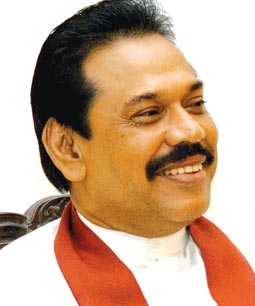
India happy with Sri Lankan poll results

By: Subhadeep Bhattacharjee


The results of the Sri Lankan Presidential polls will come as a good news to India. The government seems to be quietly happy over the victory of President Mahinda Rajapaksa. New Delhi believes understands India's worries and concerns and ill lead to political stability in a country still divided on ethnic lines. The government is also happy over the fact that doesn't need to deal with a new occupant in the Presidential Palace after showing signs of favouritism over Rajapaksa.

India and Sri Lanka had shared close political ties since independence but over the last two decades the relationship was strained first after India's military blunder with the IPKF (Indian Peace Keeping Force) and subsequent assassination of former Prime Minister Rajiv Gandhi by the LTTE (Liberation Tigers of Tamil Eelam) in 1991. These incidents made sure that India always made a measured approach when it came to the Sri Lankan foreign policy.

Certain political organisation regularly voicing the propaganda of the LTTE did not help the cause between the two countries either. India which had burnt it's fingers with the IPKF in the 80s did not want to militarily get involved with the Lankan issue. This meant that both China and Pakistan got an opportunity to establish military ties with Sri Lanka and increases their military sphere of influence in the Indian Ocean.

Rajapaksa's opponent General Sarath Fonseka had close ties with the Chinese especially people among it's too military brass. India's western neighbour Pakistan was also said to have shared warm relationship with Fonseka. From India's perspective Rajapaksa's win was very important not for the betterment of relationship between the two countries but also for India's influence over the Indian Ocean region. China had already shown keen interest in establishing naval bases in Sri Lanka.

News Delhi has now approached Colombo for the settlement of the Tamil refugees who have been torn apart by three decades of the civil war where they suffered both at the hands of the terrorist and the government. The Indian government has expressed its wish to open a Consulate in Jaffna in Northern Sri Lanka once a strong hold of the LTTE. Sri Lanka in return will open a mission in Kolkata.

Hope these ties go a long way for paving warm relationship between the two countries. India has to play a keen role in the post-LTTE Sri Lanka.

Read more...

Thursday, January 7, 2010

Kashmir: A land of great ironies

By: Subhadeep Bhattacharjee


The West says if there is one place on earth from where the Third World War could begin, it is the beautiful valley of Kashmir. Such tags of volatility of brutality attached to a place about which the great Mughal emperor Shah Jahan had once said “Agar Firdous Bar Roi Zamanast Tho, Haminasto, Haminasto, Haminasto" (If there is ever a paradise on earth, it is here, it is here, it is here). But Kashmir has been a land of ironies for the past two decades. It is an irony that all world leaders and diplomats know the beautiful Kashmir like the back of their hand for all the wrong reasons.

It is ironical that the terrorists attack in Lal Chowk area of Srinagar came on a day when J&K Chief Minister Omar Abdullah declared 2010 to be a 'Visit Kashmir Year.' The fundamentalists could not have dealt the state's tourism any better blow. Just days before this J&K police chief had figures to prove that violence in the valley in 2009 had been lowest in the last two decades since the conflict started. But statistics and figures don't always reveal the ground situation. However, it is no irony that the militants chose to target Srinagar's most famous landmark the Lal Chowk. After all a trouble territory tag serves many vested interests both within the nation and outside it.

Incidents like this questions the regular demand for troop reduction and even question the presence of such a huge number of security forces. Although militancy has been curbed to a certain extent but Kashmir still remains the most troubled territory in the country. Even though our neighbour on the west bleeds at the hands of the self created 'Frankenstein monster' it's support to infiltration of terrorists remains undeterred. It also seems highly ironical that Pakistan still hasn't gotten over its obsession with Kashmir even though every inch of its territory has been painted with stains of blood in the last few years.

Kashmir valley which was once the most favoured destination for the honeymooners and travellers wanting to escape tropical heat of the plains is the most common posting for an armed force personal today. The Chinar trees have given way to police and army pickets and Dal's beauty has be ruined by the barbed wires. There is anguish among certain groups of people towards the government but majority of Kashmiris seem to have become tired of violence. The irony however is even a minute law and order incident is enough to bring people to the streets and halt normal life in the valley for days.

The biggest irony of all is that the entire idea of 'Kashmiriat' seems to have gone for a toss. Ordinary Kashmiri people are sandwiched between the separatists, the moderates, the government and it's biggest instrument the military. Another irony is that all these groups claim to represent the people of Kashmir but ask any ordinary Kashmiri his conviction may be as varied as the shades of grey. Somewhere in all these irony 'Paradise on Earth' is dying a slow death. Wonder if there will come a time when someone will again stand up and say “Agar Firdous Bar Roi Zamanast Tho, Haminasto, Haminasto, Haminasto”

Read more...

Wednesday, December 16, 2009

16th December: A day India has forgotten

By: Subhadeep Bhattacharjee


Ask any youth the significance of December 16 and you are most likely not to get any answer. It is not surprising considering many in the MTV generation have confusion regarding the Independence and the Republic Days. 16th December is celebrated as Vijay Diwas commemorating India's great victory over Pakistan in 1971 War. The day holds significance as it was the day Bangladesh came into existence 38 years ago, emerging out of a genocide.

Vijay Diwas has been reduced to an ordinary day with some official ceremonies in the India Gate, Fort Williams in Kolkata and some defense establishments across the country. The post liberalisation era Indians might not realise that 4000 Indian soldiers laid down their lives for the liberation of Bangladesh from the oppressing Pakistani Army. It may also interest a few that the 90000 Pakistani soldiers surrendering to India was the highest since the Second World War.

This victory should be remembered with pride as India defied all odds to win the war. It was a war thrown upon India and not one India chose. The scores of East Pakistani refugee fleeing the genocide and taking shelter in India had left Indira Gandhi with no option but to use the military. Indira mobilised the support of the entire Western European nations in India's resolve to bring to an end the genocide that was going on in then East Pakistan.

Our present best friend America was threatening us and President Richard Nixon had even mobilised aircraft carrier USS Enterprises in the Bay of Bengal. Thanks to Soviet premier Leonid Brezhnev, India could ignore the US threat. In 13 days Indian Army, Navy and Air Force with the help of Mukti Bahini achieved which many Western military commanders said would take months. On December 16 Pakistani commander Lt. Gen. A.A.K. Niazi surrendered before Lt. Gen. Jagjit Singh Arora with 90000 troops ending the war and which led to the formation of People's Republic of Bangladesh.

A lot of politics has been played over the Vijay Diwas which is regarded as Indira Gandhi's finest hour as Prime Minister. BJP which was in power post the Kargil conflict took away the shine from this day and giving more significance to the Kargil Vijay Diwas on July 26th when to celebrate India's victory in the Kargil war when India successfully took command of the high outposts which had been lost to Pakistani intruders.

It is a sad thing to see Indians forget their days of military significance. In the west people still commemorate significant days to honour heroes who have laid down their lives for the sake of their motherland. From movies to rock music and from food to dressing, we have copied so much from the West, why is it that we could not adopt a few good qualities like respecting our heroes?

Read more...

Thursday, November 26, 2009

Are we really safe?

By: Subhadeep Bhattacharjee


As we observe the first anniversary of the 26/11 attack one question which is there in everybody's mind is are we safe? Can we hope that a 26/11 like attack won't happen again? These are questions which perhaps have no answers. Although the government has taken some measures to deal with such a terror scenario it has done very little to prevent 26/11 like incidents. The situation on the ground still remains a worrying factor for the society.

Although we have sent several dossiers to Pakistan what has that resulted in? Has the infiltration in J&K come down, or has Pakistan taken any concrete measures to deal with the handlers of 26/11 other than displaying mere tokenism? What makes our Prime Minister sign a joint declarations with a country which is fighting a proxy war against us? Why is it that we don't attempt to neutralise terrorists like Hafeez Sayeed thus taking the war to the conspirators of attacks against us?

The heroics of our NSG men during the attack meant that most of the states immediately demanded NSG hubs for their states. The civil society sees this as a full proof measure for their security. We couldn't be more wrong in our assumption. NSG is a reactive force and acts whenever there is a crisis situation. So they don't prevent a fiyadeen attack or a bomb blast in a busy market area. Secondly NSG being a highly skilled force small in number will only be called out during major operations.

It is the local police and the intelligence network that has to be strengthened. It is easier said that done as India has one of the worst police to people ratio in the world. Add to it the fact that most of these men are not armed (forget the term poorly armed) fighting terrorist becomes an impossible task. It isn't surprising that regularly being made to do ornamental duty around the politicians and bureaucrats, many of our policeman aren't fit to fight terror any more.

The civil society also has to take up responsibility of making the nation secure. How many of us really don't mind getting frisked? Isn't that for our own security? Are we willing to shed a little bit of our 'Fundamental Rights' which can go a long way in making our country secure? Why can't we think of citizen policing like it is practised many modern nations. Do we verify the identity of individuals before renting them a house or selling them a vehicle? Are we playing our part correctly?

We have to take strong measures to make our nation safe. The absence of a major attack isn't a concrete proof that our internal security system is in place. All of us see a completely different picture when we walk onto the streets and don't feel secured. As someone rightly put it we are safe till the next attack. So, lets not sleep till something worst that 26/11 happens.

Read more...

Wednesday, November 18, 2009

Women pilots to fly fighters in IAF?

By: Subhadeep Bhattacharjee


A lot is being said about President Pratibha Devisingh Patil's scheduled ceremonial flight in a Sukhoi-30MKI. Being the supreme commander of the armed forces in the country our President wants to lay a precedent like her predecessor APJ Abdul Kalam did. But honestly it seems quite an absurd thing in a country where women are still not allowed to sit in the cockpit of a fighter jet. What message does the President or the Indian Air Force wants to send to the nation. Ceremonial flights and forward base visits seldom boost the moral of soldiers

Although women are allowed to fly transport aircrafts and helicopters they are yet to sit in the supersonic jets. Women not being allowed to enter the combat forces has been more due to cultural reasons than anything else. Although we have had the legends of Razia Sultana and Rani Laxmi Bai we are yet to come in terms with Indian women being involved in combat. The bar on it is not illogical though with a huge chance of women being exposed to grave threats like being taken a Prisoner of War if they get into combat roles.

IAF vice chief Air Marshal P K Barbora said that women fighter pilots in the future might have to avoid getting pregnant during their flying career of 10-15 years. This will soon snowball into a major controversy with Women Rights Groups making a issue out of it. But is what P K Barbora saying absolutely wrong? The IAF spends over 12 crore to train a pilot and this spread over a period of 10-15 years that would me almost a crore a year for a pilot. A medical leave of close to one year will mean a loss of Rs 1 crore of tax payer's money. Now does that amount seems insignificant to any individual?

Now, many people might argue that the IAF is talking away the right to freedom from women if they are inducted into the fighter wings. It may be so but women who choose to go into specialised combat wings might have to make this much sacrifice. All male fighter pilots are required to report to the duty immediately when a crisis arises, similar will be the case with women pilots when ever they are inducted into the fighter wings.

So if women are determined to join the Indian Air Force's fighter wing they should be prepared to make such sacrifices in their personal lives. After all, IAF fighter wing is a specialised job not an employment generation scheme.

Read more...

Monday, November 2, 2009

Govt. should raise a special anti-naxal force

By: Subhadeep Bhattacharjee


Although Naxalims has become the biggest internal security threat to the country the law enforcement agencies don't seem to be doing enough to curb their menace. Naxals are being fought on an disorganised platform with the various state police and the Central Reserve Police Force engaged in countering the Left. Although the special forces like the COBRA and Grey Hound have been able to deliver blows to the Naxals but the threat still looms over the Red Corridor.

Most of the attacks that the Naxals carry out are in the inter-state border, be it the Bengal-Orissa-Jharkhand border or the Chattisgarh-Maharashtra border. The Naxals take advantage of the fact that there is very less co-ordination between different state polices and at times even the area of jurisdiction isn't known clearly to the security forces. It is known fact that different law enforcement agencies are not known to function best in collaboration with each other. The Unified Command structure in North East and the Army-BSF structure in J&K never yielded much results.

On the other hand the raising of Rashtriya Rifles to counter terrorism in J&K and ITBP (Indo-Tibetan Border Police) to protect the China border has been a success. So the question is should the government raise a special force to counter Naxalism? Considering the gravity of the situation this seems to be the most logical call. Instead of raising more battalions of the CRPF, the Centre should contemplate raising a special force. This can be a very small forces as compared to the CRPF but it can be well trained.

All combat situations are different and battle grounds challenging. A force raised specially for this kind of combat and trained in guerilla warfare is a better solution that pushing the CRPF which is mainly trained to assist the state police and take care of the law and order problems. A central force with its own command structure spread across the Naxal infested states will ensure better coordination and intelligence sharing.

Centre needs to play a more commanding role in dealing with the problem. Different states should not be left to play politics with the issue and fight the Naxals with their own choice of intensity. The problem is a national one and it is hight time this is dealt with iron fist on one hand and with development on the other. Raising of Central Force to deal with the Naxals is an urgent call which the centre needs to address.

Read more...

Thursday, October 15, 2009

Pakistan falls victim to its own monster

By: Subhadeep Bhattacharjee

There is a saying in the Indian culture that when you play too much with fire you are at the risk of burning your hands. The saying holds true for our neighbour Pakistan. For years Islamabad harboured the so called jehadis to first fight the Russians in Afghanistan and than create trouble in India. But now Islamabad and the entire Pakistan is having to live under constant fear of attacks by the same 'holy fighters' whom they were once proud of.

The back to back attacks on Lahore have once again proved that the Frankenstein Monster that Pakistan created is slowly moving towards controlling the entire nation. The irony is that Pakistan is probably the only nation in the world which is actively supporting terrorism at the same time facing its heat. It is not surprising for New Delhi that Pakistan still supports terror camps in the Pak occupied Kashmir and regularly backs infiltration into India.

The Pakistani army is too far stretched to make a productive counter attack against these men who quite freely roam in the streets of Pakistan. On one hand the Pakistani army is guarding the Pak-Afghan border and fighting rebels in Baluchistan. On the other hand it is being attacked in the most fortified of the places in the county and the terrorists are striking at will at their cantonments. Its obsession with India on the eastern front means that it is unable to redeploy troops to take on the terrorists.

The fundamental problem for Pakistani people and the government lies with the fact that they are obsessed with India and the Kashmir issue. Since the defeat in the 1971 war Pakistani government with the help of religious fundamentalist have intoxicated generations of young men and women to have a strong anti-India feeling which later turned into a anti-West feeling when US attacked Afghanistan after the fall of Twin Towers in 2001.

There is no easy solution for the problem in Pakistan. The culture of promoting terrorism has to be looked into seriously if Pakistan has to come out of this menace. The people of Pakistan must understand that they individually stand to gain nothing from the Kashmir issue but being obsessed about this issue might trigger the Doom's Day for them. The Pakistani government must focus on saving precious lives in Pakistan rather than taking lives of Indians by promoting a proxy war in India.

Read more...

Wednesday, October 14, 2009

India shouldn't lend ear to Chinese protest

By: Subhadeep Bhattacharjee

The Chinese protest over Prime Minister Manmohan Singh's weekend visit to Arunachal Pradesh did not come as a surprise to many. Beijing expressed dissatisfaction over Singh's trip and said Indian side should address China's serious and just concerns and not trigger disturbances in the disputed region so as to facilitate the healthy development of China-India relations. This because China doesn't recognise Arunachal Pradesh to be a part of the Indian Union.

This is the latest in a series of protest raised by China in the recent months. First Beijing had sought to block part of a loan to India from the Asian Development Bank earmarked for projects in Arunachal Pradesh as it regularly opposes any developmental work in the state. Then it had protested the visit of Dalai Lama to Arunachal as he has been leading the Tibetan freedom moment for the last four decades from the Indian soil after having sought asylum here.

The question now arises should we react to such protest made by the Chinese. The answer is a straight 'NO' as Arunachal Pradesh is an integral part of the Indian Union and our Prime Minister's visit to the state should not be subject to Chinese permission. The Red Country has been protesting on every VIP visit to the state for the last six decades and its claim on India's eastern most state had led to the Sino-Indian war in 1962.

Teasing India seems to be a major strategy in the Chinese Foreign Policy. China sees India as its biggest competitor in the coming decade, and its growth lies in India's slow progress. One strategy to unsettle India is by regularly issuing it military and diplomatic threats. They are also helped by the fact that a huge chunk of the Indian population believes in Chinese economic and military might and feels India is no comparison to China.

China might be militarily and economically ahead of us at the moment but they are no fools to confront India directly. If any theory says India can't win a war versus China the same theory also says China can't win a conventional military war against India. Thus the Chinese military threat is more of psychological than in reality. Small intrusions and border violations are a part of the game in any disputed border in the world.

So Indian needs to be more assertive when dealing with China. If we believe Arunachal Pradesh to be an integral part of our country we should not lend ear to Chinese protests. China will never think about a large scale military operation against India as it will be self demolishing act if it does so. So our leaders need to strong with more resolve and not bow down to each and every protest that comes from Beijing.

Read more...

Monday, October 12, 2009

India confused about dealing with Naxals

By: Subhadeep Bhattacharjee

India is no stranger to terror, be it the home grown terror in the North East or the cross border terrorism in the state of Jammu and Kashmir India has seen it all. Killings, explosion, extortion and atrocities are no longer foreign words in an Indian's life. Yet the new face of terror the 'Red Terror' as it is being called has suddenly shaken the entire nation. What was thought to be a local armed moment in the backward regions of the country is spreading like wild fire in the entire countryside and may soon hit urban India.

The alarming thing is that both the Centre and the various state governments have no concrete plans to tackle it. West Bengal Chief Minister Buddhadeb Bhattacharjee requesting Jharkhand to act against the Naxals to complement police action against the outlawed outfits by the West Bengal police proves the poor coordination between the states. Even though more than 140 districts of the country are severely effected by this menace and another 200 partially effected we still do not have a proper task force to deal with the problem.

Red Terror was allowed to grow because the entire government thought it to be a rural problem and never really cared to take it seriously. The fall of the monarchy in Nepal and the subsequent rise of Maoist in Nepal politics was missed by our security forces. Peace in Nepal meant that the focus could be shifted to the armed struggle in India. In the last few years the attacks carried out by the Naxals have been so ferocious that our Prime Minister Dr. Manmohan Singh acknowledged it to be the single biggest threat to the nation.

There is a school of thought that Naxalism rose due to the socio-economic problem of the people in the tribal belts of the country. May be true but this armed conflict has now taken a monstrous shape. Although many Human Rights group back Red Terror being members of the civil society how on earth can they justify beheading of people in the name ideology? Or blowing up schools, electricity lines, mobile towers and than blaming the government for backwardness?

The government should draft a clear plan towards dealing with this armed moment. The Naxals should not be treated any less than thugs and bandits. Given the fact that these people do not believe in the channel of Indian democracy to table their thoughts the State should take them on with a iron fist. Naxalism is no longer a socio-economic problem but a armed moment against the people of these nation and should be dealt with firmly.

Read more...

Tuesday, September 15, 2009

India surrendering in front of China?

By: Subhadeep Bhattacharjee

It took the Indian authorities more than two weeks to reveal that that two jawans of the Indo-Tibetan Border Police, were injured in bullets fired from the Chinese side. The firing took place in an area identified as Kerang in northern Sikkim and took place a fortnight ago but the Indian authorities decided to brush it under the carpet. This incident is just another episode in China's regular intrusion into the Indian territory in the last couple of months.

This is not the first time this violation has happened it is quite a regular feature in Arunachal Pradesh over which China still lays its claims. Chinese military regularly indulges in cat and mouse games with the Indian security forces. Although we react to any action on the Indo-Pak border when it comes to the Sino-Indian border our government acts spineless and surrenders most of the time in front of the 'Red Dragon.' Indian establishment has time and again played down incidents on the Sino-India border.

The latest of China's protest comes in wake of Dalai Lama's proposed visit to Arunachal in the month of November. But this time around Indian authorities have shown some grit and are not stopping the Buddhist guru from visiting Arunachal. It may be recalled that Indian authorities had prevented him from visiting Arunachal in 2008 after China protested. Wasn't that an act of surrender where we don't allow a person who has taken refuge in India to travel freely because China opposes it?

Our obsession with the western borders with Pakistan has meant that the eastern states bordering China have been neglected. Indian authorities are aware it is at a disadvantage with China. On the border, the Chinese, with their superior road and rail networks, can actually come up to LAC and move thousands of troops in no time while it takes days for the Indian troops to get to the border. This gives them the advantage to play a hide and seek game with India.

This however should no reason for us to bow down before China. We need to protect the territorial integrity of our nation at any cost. There is a certain fear that looms over the Indian security forces what if China goes to war with India? This fear has made sure that we have always bowed down to the Chinese and never looked them into the eye. But this attitude of ours has been taken for granted in China and results are here to see.

The paranoia about the war has very little logic as fighting a war with India will cost the Chinese economy dear and which they are definitely not prepared to do. Logically China would never want India to rise and challenge its position as a future superpower and thus wants to keep India in an environment of fear. Indian government needs to be assertive if not aggressive while dealing with China or else we will have to live with the incidents we have seen in the last couple of months.

Read more...

Monday, September 14, 2009

Musharraf lets out the truth!

By: Subhadeep Bhattacharjee

Pakistan used US military aid against India instead of fighting terror on Pakistan’s western borders. The aid which was provided by the US to fight the Taliban went into fortifying the borders with India.
Pakistan invested the money in developing long range missiles to fight India and not Taliban. Anybody who focuses Indo-Pak relationship won't find this revelation startling at all. But this comes straight from the horse's mouth and in this case it is none other than former Pakistani President Gen Pervez Musharraf.

Musharraf who held the command of the country from 1999 to 2007 admitted that he had violated the rules governing the use of the military aid. But not a person to miss an opportunity to glorify himself Musharraf justified his action, saying he had acted in the best interest of Pakistan. He said he did not care whether the U.S. would be angered by his disclosure.

Taking a dig at the US for the first time he said that after 9/11 American forces could have entered Pakistan to capture its nuclear assets. It was also possible that the U.S. and India could have jointly attacked the country. The question is why is Musharraf saying all these things now? How does a pro-American General suddenly turn against the Yankees? What has Musharraf to gain from this revelation at a time when his country is fighting the fundamentalists on the western front?

Firstly Musharraf has fallen away from good books of the US especially after the Obama administration took over. So siding with the US won't fetch him any goodies in the future. He is desperately trying to make a space for himself in Pakistani politics. For that he need to shed the anti-Islam image that he incurred having partnered US in the war against terror in Afghanistan. What better way to be a Pakistani nationalist than take an anti-India stance.

Stating that US military aid was used against India not only cleanses some of his anti-Islam sin but also gives him a few bonus points having taken on Pakistan's THE ENEMY. A problem with Pakistani military has been its obsession with India and the dream war against it. Musharraf is no different from the ordinary soldiers and officers in Pakistan who dream of taking over New Delhi some day. Having said that Musharraf still seems to have played quite a master stroke to pave his way back into Pakistani politics.

It is now the all powerful United States of America to decide where they want their funds to go fighting the Taliban or building minefields along the Indian border. It will be foolish to think that US wasn't aware of all these things happening but it will be interesting to see Uncle Sam's stance after Musharraf seems to have made a mockery out of them. It won't be surprising if US doubles its military aid to Pakistan after all it is one weapon through which it can neutralise India considering it fears India's economic growth.

Read more...

Friday, September 11, 2009

China wants Indian media gagged

By: Subhadeep Bhattacharjee

As if threatening us with regular military intrusion all across the border wasn't enough the Chinese now want a gag on Indian media. In a recent news that appeared on a state-run Chinese newspaper, the officials accused the Indian media of trying to present a bleak picture of the Sino-Indian relations. The news article further went on to add that the Indian media was raising a war rhetoric and sowing the seeds of enmity between the two countries.

This piece of news comes amidst reports that the Chinese border guards intruded into Ladakh and painted boulders and rocks red there. Although China denied any such intrusion it is anybody's guess as to why would somebody paint the stones red in such a harsh terrain. Although China plays a regular cat and mouse game with India this is the first time that they have hit out at the Indian media for maligning China's image.

The reason a state-run Chinese newspaper has been able to do that is because the way our government deals with the communist nation. Too often than not Indian government has always acted spineless when it has come to China. New Delhi doesn't seem to have come out if the shock of 1962 war and is willing to take any level of breach in its security from China with folded hands. The government doesn't even raise a strong protest with Beijing forget taking any military action.

It is a well known fact that at present China is a bigger military threat than Pakistan for India and New Delhi is is no mood to have any military conflict with China. If there is a logic which says India should not go on a war with China, the same logic also says that Chinese will not want to fight a war with India. The call here is not for the Indian government to be aggressive against the Chinese but to be assertive while dealing with them.

On Chinese government official trying to gag the Indian media, well it is not surprising coming from a country where there is no 'Right to Freedom' and 'Freedom of Speech'. Chinese administration has always crushed people who have spoken out against it so they are not used to criticism. The Indian media need not give an ear to what the Chinese government say, after all it is the same government which runs tanks on its own citizen and returns the call for democracy with a 'Tiananmen Square'

Read more...

Tuesday, August 11, 2009

Chinese Naval threat looms over India

By: Subhadeep Bhattacharjee

The Chief of the Naval Staff, Admiral Sureesh Mehta raised the issue of threat posed by Chinese Navy to the Indian national security. He said that China would certainly be Indian Navy's primary challenges in the years ahead. Over the last two decades with its economic boom China has heavily invested on its military. The country that already boasts of having the largest land army in the world now has the third largest navy in the world.

Reading between the lines of Admiral Mehta's statement one thing is clear Indian Navy's greatest threat is not Pakistan any more it is China. The economic race for supremacy between the two Asian neighbours has led to an obsession for military might especially across the Great Wall. China sees India as its biggest economic threat. It has used Pakistan as a neutralising factor arming them with basaltic missiles and even helping them with their nuclear programme.

Over the last decade or so Beijing has been trying to increase the sphere of influence of its Navy in India's immediate neighbourhood. It already plans to set up naval bases in Malayan peninsular which will pose a direct threat to the Indian Navy in Bay of Bengal. It will also give the Chinese direct access to the Indian Ocean. China also extended military support to the Sri Lankan army in its fight against the LTTE causing worry among Indian military commanders.

Going by sheer numbers Indian Navy stands no comparison to the Chinese Navy. On headcount the Chinese Navy stands at 250000 personnel compared 55000 of the Indian Navy. They have three aircraft carrier compared to one India has. The number of destroyers and frigates 21 and 42 as compared to 8 and 16 on the Indian side. The submarines have even a poorer ratio with Chinese having 68 as compared to 8 on the Indian side.

Chinese official defence budget stands at $40 billion but it is estimated that Red Dragon spends between $70 billion to $200 billion on defence production and purchase annually. Indian defence budget which stands at $20 billion is no match to China. To add to our woes we share borders with countries like Pakistan and Bangladesh promoting terrorism in India and much of out defence budget is utilised in the counter insurgency process.

This perhaps justifies India's bow down diplomacy with China. India would be foolish if its went along competing with China considering the size of its economy, infrastructure and military spending. Pakistan serves as an example in this regard. Their obsession to militarily compete with India led to the downfall in their economy. As Admiral Mehta put it cooperation rather than conflict is the way to deal with China.

Read more...

  © Blogger templates The Professional Template by Ourblogtemplates.com 2008

Back to TOP